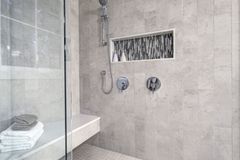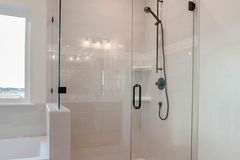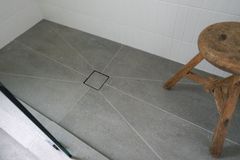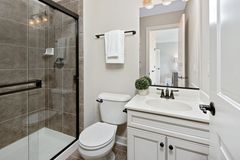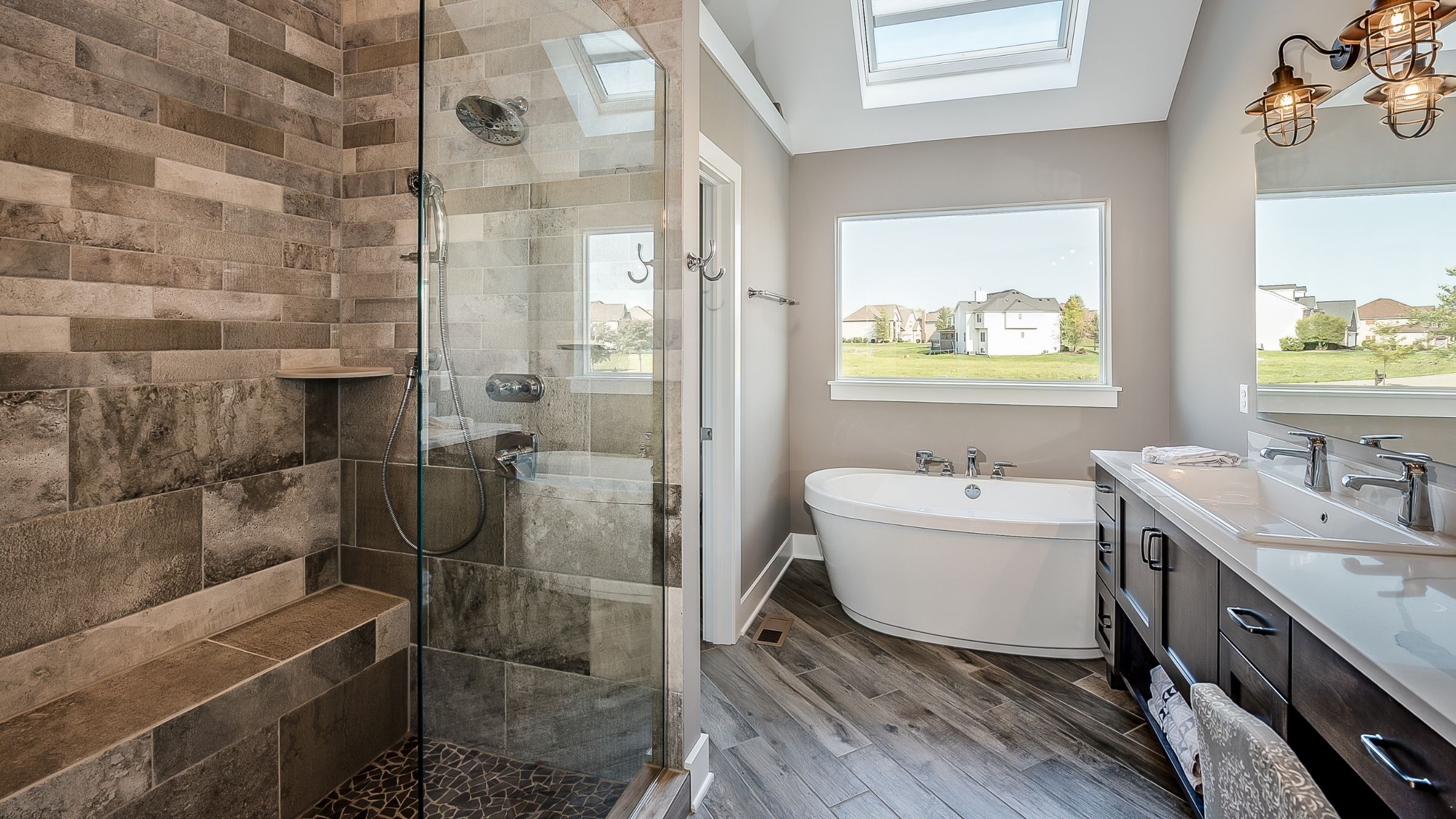
Sometimes, and it’s fixable. A doorless shower can feel cold, but the cause is almost never the absence of a door on its own. It’s that an open shower makes the whole bathroom’s conditions matter, where an enclosed one lets you ignore them.
Four things cause the sensation. Each has a different fix.
Airflow across the opening
This is the biggest one and the most overlooked.
In an enclosed shower, warm humid air stays in the enclosure. In an open one, any air moving through the bathroom moves across you — and moving air over wet skin is what your body reads as cold, regardless of the air’s actual temperature.
The usual sources are an HVAC supply register blowing toward the shower, an extraction fan pulling air across the opening rather than up out of it, and a door to the hallway that creates a path from one side of the room to the other.
The fix is orientation. Angle the opening away from the room’s main air path. If you’re at the design stage, that’s free. If you aren’t, redirecting a supply register or repositioning the extraction usually solves it.
Cold surfaces
Tile is a good conductor. A cold tile floor pulls heat out of your feet directly, and cold walls radiate away from you.
In an enclosed shower those surfaces warm quickly because the enclosure traps heat against them. In an open shower they’re being cooled by the whole room.
The fix is heat in the surface. Electric radiant floor heating runs $8 to $25 per square foot installed per the EstimationPro.AI construction cost dataset, 2026 — and on a bathroom floor that’s a small area. It is the single most effective change for an open shower that feels cold, and it warms the whole room rather than just the shower.
The room is simply cold
An open shower is only as warm as the bathroom, and bathrooms are often the worst-heated room in a house — exterior walls, a window, minimal supply, and a fan actively removing air.
The fix is heating the room properly: adequate supply, a heated towel rail or panel, and running the fan on a timer after the shower rather than throughout it.
Water arriving cold on the way down
A rain head mounted high drops water through more air before it reaches you, and it arrives cooler. This is a real effect and it’s worse in a cool room.
The fix is placement. A conventional or handheld head at normal height loses less heat in transit. If you want the rain head, pair it with one of the above rather than fighting it alone.
The layout changes that help
If the shower is still being designed, three decisions do most of the work.
Depth. A deeper shower puts more distance between you and the opening, which is the same reason it keeps water in. This is the cheapest fix and it costs nothing but layout.
A return panel. A fixed glass panel at the wet side blocks the draft path without enclosing the shower. It’s the compromise most people end up wanting — see choosing a shower door.
Head position. Mounting the head so the spray runs away from the opening keeps the warm plume where you are.
What doesn’t work
Turning the water up. Hotter water evaporates faster off your skin, which cools you between sprays. It also isn’t safe at the temperatures people reach for when they’re cold.
A curtain across the opening. It defeats the reason you wanted an open shower and doesn’t seal well enough to trap heat properly.
Assuming it’s the concept. Enclosed showers in cold, draughty bathrooms are unpleasant too — you just don’t notice until you step out.
For the project as a whole, see walk-in shower cost, and for how the same airflow and layout decisions affect water escaping, stop water splashing out of your walk-in shower.