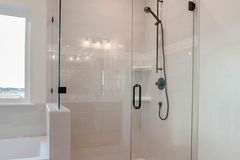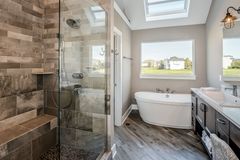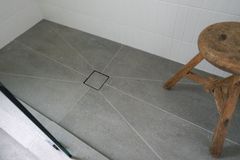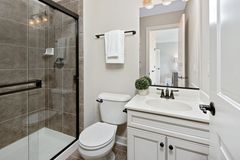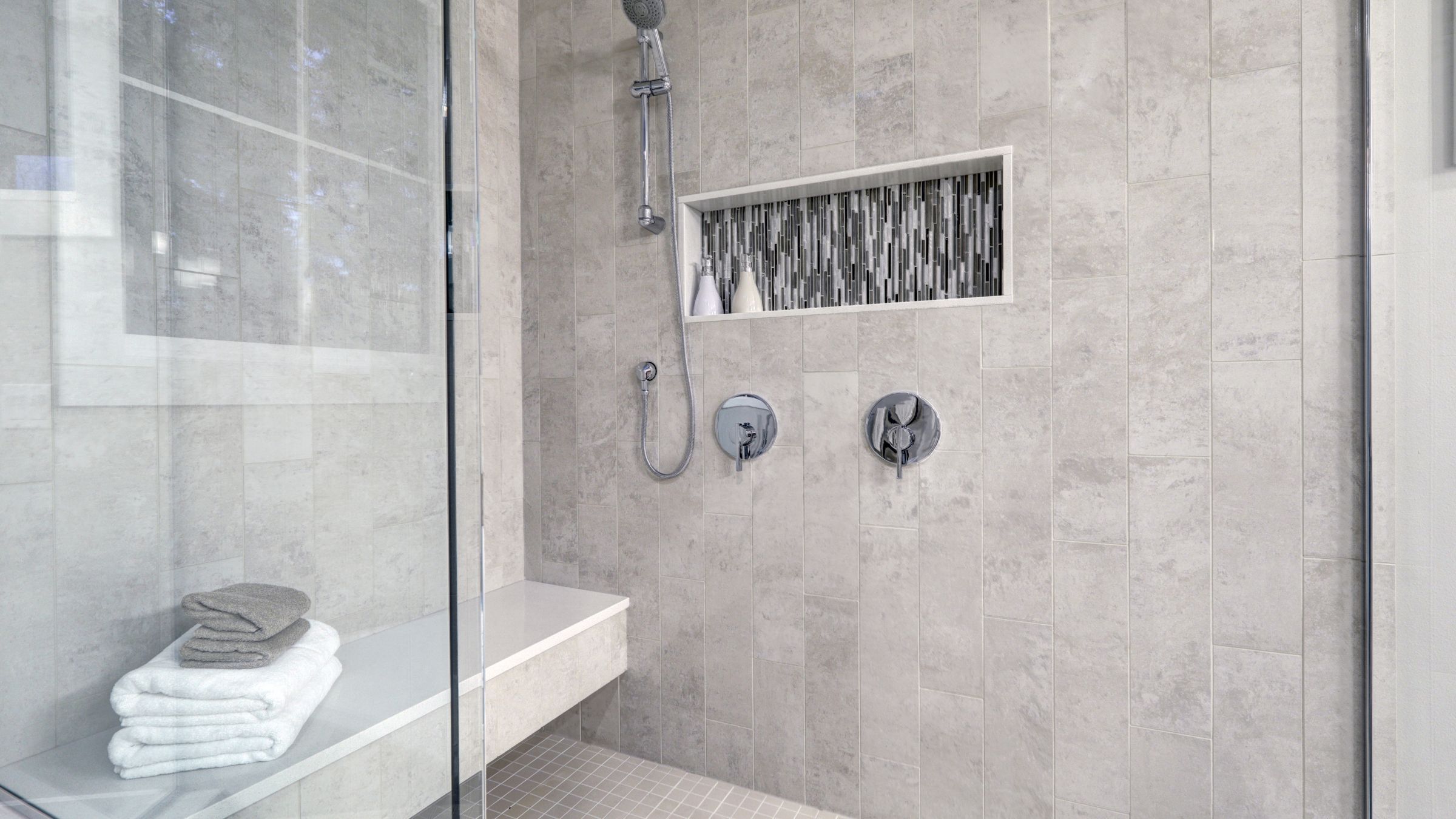
A custom tile walk-in shower runs $6,000 to $15,000, with $9,000 typical. A tub-to-shower conversion — removing an existing tub and building a tiled shower in its footprint — runs $2,000 to $10,000, typical $4,500.
That’s a wide spread for what sounds like one project. The range isn’t imprecision; it’s the difference between a straightforward swap and a rebuilt wet area.
What decides where you land
Three things account for most of the spread.
Whether the footprint changes. Building a shower where a shower already was is the cheapest version. Removing a tub and tiling its footprint is more work but still contained. Moving the drain, changing the shower’s dimensions or taking out a wall means plumbing and framing, and that is where projects jump.
How much tile, and which tile. Shower wall tile runs $10 to $30 per square foot installed. A standard alcove has 80 to 100 square feet of wall, so the tile choice alone can swing the job by a couple of thousand. Large-format tile adds $2 to $6 per square foot over standard.
The enclosure. Nothing, a fixed panel, or a frameless door — a spread of roughly $400 to $2,500 for the same shower.
Bathroom size matters less than people expect. A larger bathroom means a larger shower only if you make it one; the cost follows the shower, not the room.
What’s behind the tile
A tiled shower wall, framing outward. Everything behind the tile is what stops the wall rotting.
The tile is the part you choose and the part you see. The membrane behind it is the part that decides whether the wall lasts.
This matters at quoting time because waterproofing is invisible in a finished shower, which makes it the easiest thing to under-specify. A quote that itemises the waterproofing method has thought about it. One that only prices tile has priced the surface.
The other thing to settle before the wall closes is blocking — solid timber between studs wherever a grab bar, bench or niche will be fixed. It costs almost nothing during framing and is disproportionately expensive to add later, so decide on grab bars before the wall is closed even if you don’t want them yet.
Fixtures, and what they actually cost
The per-item chart above is worth reading against the total. A grab bar at $150 and a niche at $300 are rounding errors on a $9,000 project, and they’re the features people most often leave out to save money.
A built-in tile bench is the one genuine cost — $400 to $1,200 — because it’s framed, waterproofed and tiled like a small extension of the wall. A fold-down seat does much of the same job for a fraction of that, and can be added later.
Glass
The enclosure is the largest optional line on most projects, and the choice is less about looks than about how the shower is laid out.
Nothing at all works when the shower is deep enough that water doesn’t reach the opening. That’s a design decision made at layout, not a saving you can take later.
A fixed panel at $400 to $1,200 covers the wet side without a moving part. It’s the most common answer for a walk-in and the cheapest that actually works.
A frameless door at $800 to $2,500 is the premium option, and it needs thicker glass, precise hardware and a level opening.
For which suits your layout, see choosing a shower door.
What isn’t in the number
Plumbing relocation. Rough-in runs $600 to $2,000 per fixture. Moving a drain is the single most expensive thing you can decide to do.
Subfloor repair. Only visible after demolition, same as roof decking.
Ventilation. An exhaust fan replacement runs $150 to $450, and a shower without adequate extraction moves the moisture problem into the room.
Wider remodelling. If the vanity, toilet and floor are going too, that’s a bathroom remodel rather than a shower project. Mid-range bathroom remodels run $12,000 to $30,000.
Getting a number for your bathroom
These figures are national. The same job prices 14% below national in some ZIP codes and 23% above in others.
The walk-in showers cost guide has modelled project totals by bathroom size and market.