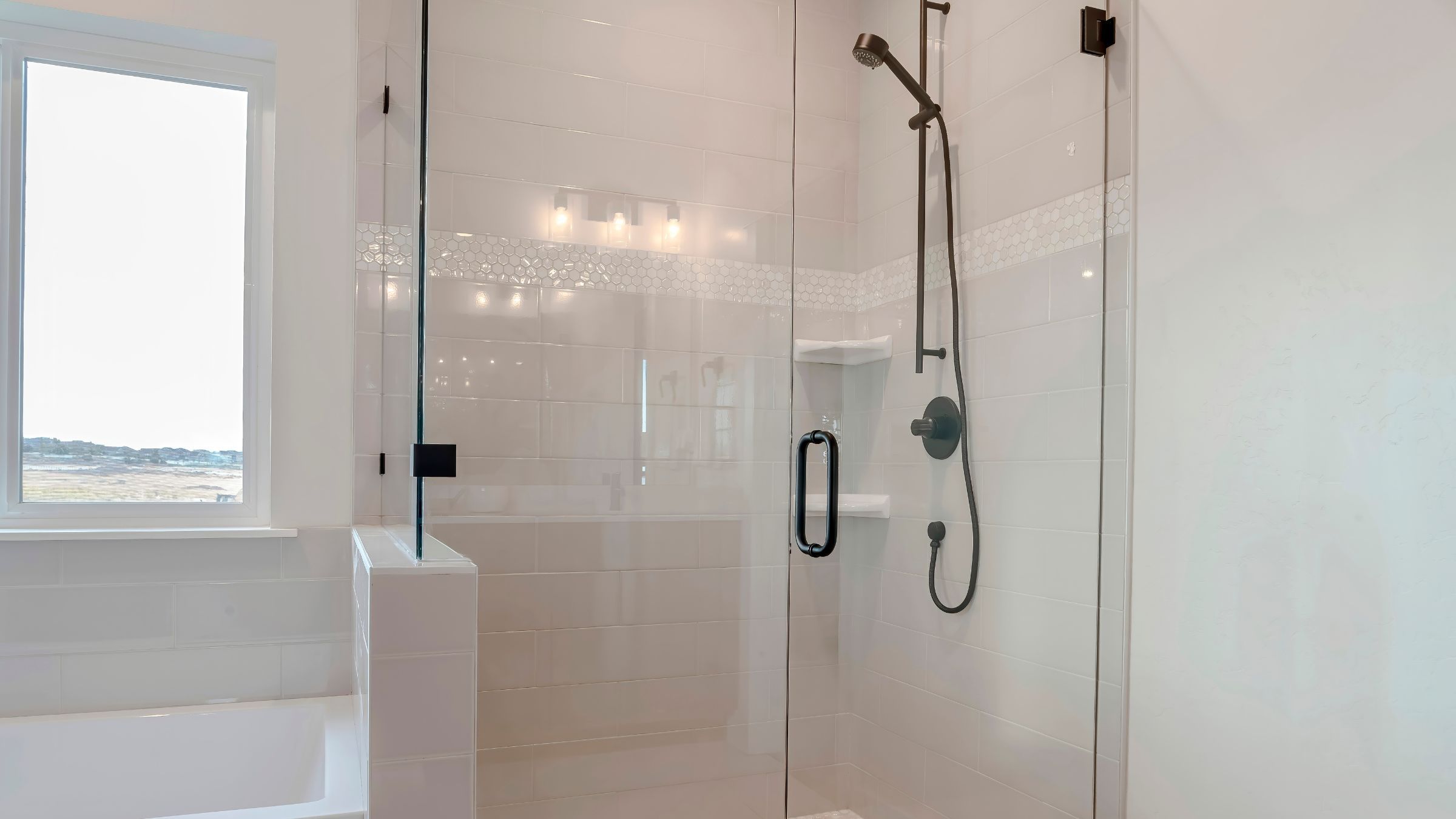
A shower enclosure runs $400 to $2,500 installed depending on what you choose. That’s a bigger spread than most fixtures in a bathroom, and the right answer depends more on your layout than on your taste.
Start with the opening, not the style
The constraint that decides everything is clearance.
A hinged or pivot door swings, so it needs floor space in front of it that isn’t occupied by a vanity, a toilet or a door into the room. In a tight bathroom that space often doesn’t exist, and no amount of wanting a pivot door creates it.
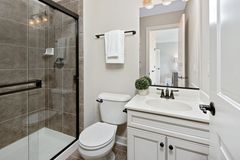
A sliding — or bypass — door moves within its own footprint. Two panels pass each other, so nothing projects into the room. That’s why sliders dominate tub-shower combinations and narrow alcoves.
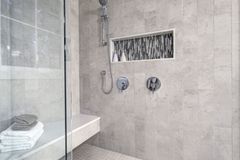
A fixed panel doesn’t move at all. It shields the wet side of a walk-in opening and leaves the rest open. For a walk-in shower deep enough that water doesn’t reach the entry, this is usually the correct answer and the cheapest one that works.
Measure the swing before you fall in love with a door.
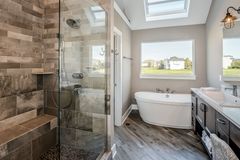
Framed, semi-frameless, frameless
| Framed | Semi-frameless | Frameless | |
|---|---|---|---|
| Metal | Around every edge | Perimeter only, not the door edge | Hardware only — hinges and handle |
| Glass | Thinner, supported by the frame | Mid-weight | Thick tempered, self-supporting |
| Water control | Best — seals on every side | Good | Relies on precise fit and a drip line |
| Cleaning | Tracks and channels collect residue | Fewer channels | Least to trap anything |
| Install tolerance | Forgiving of out-of-square openings | Moderate | Unforgiving — needs a true opening |
The trade-off people underestimate is the last row. Frameless glass has no frame to absorb an opening that isn’t square, and older bathrooms rarely are. A frameless door in a out-of-true opening either won’t close cleanly or leaves a visible taper.
Framed doors are the opposite: the frame hides the discrepancy. They’re cheaper, they seal better, and the cost is that you’re cleaning the tracks.
Glass, coatings and hardware
Thickness follows the style. Frameless needs thicker tempered glass because it carries its own weight; framed can use thinner glass because the frame does.
Clear, frosted or textured is mostly a privacy and light question. Clear shows every water spot, which is why it looks best in photographs and demands the most upkeep.
Protective coatings — factory-applied treatments that make glass shed water — genuinely reduce spotting. They are not permanent, and they wear faster if cleaned with abrasive products.
Finish should match the rest of the room’s hardware rather than the shower’s. The door is the largest piece of visible metal in most bathrooms.
Measuring
Three measurements, each taken three times.
Width at the top, middle and bottom of the opening. If they differ by more than a small amount, that’s your answer on frameless.
Height to the point where the enclosure will terminate, allowing for the curb or threshold.
Plumb and level. Check the walls with a level. Out-of-plumb walls are common, and they matter more than out-of-square floors.
Order after demolition and tiling, not before. Tile thickness changes the finished opening, and the difference is enough to matter on a frameless unit.
If the budget is the constraint
A fixed panel at $400 to $1,200 does most of the job of a door in a walk-in layout. A semi-frameless door at $500 to $1,500 gets most of the frameless look for roughly half.
And in a genuinely tight budget, a curtain with a weighted hem and a rigid return panel at the hinge side controls water better than its reputation suggests — see how to remodel a shower on a budget.
For the whole project rather than the enclosure, see walk-in shower cost and the walk-in showers cost guide.