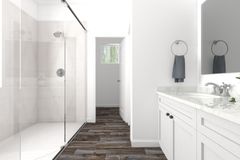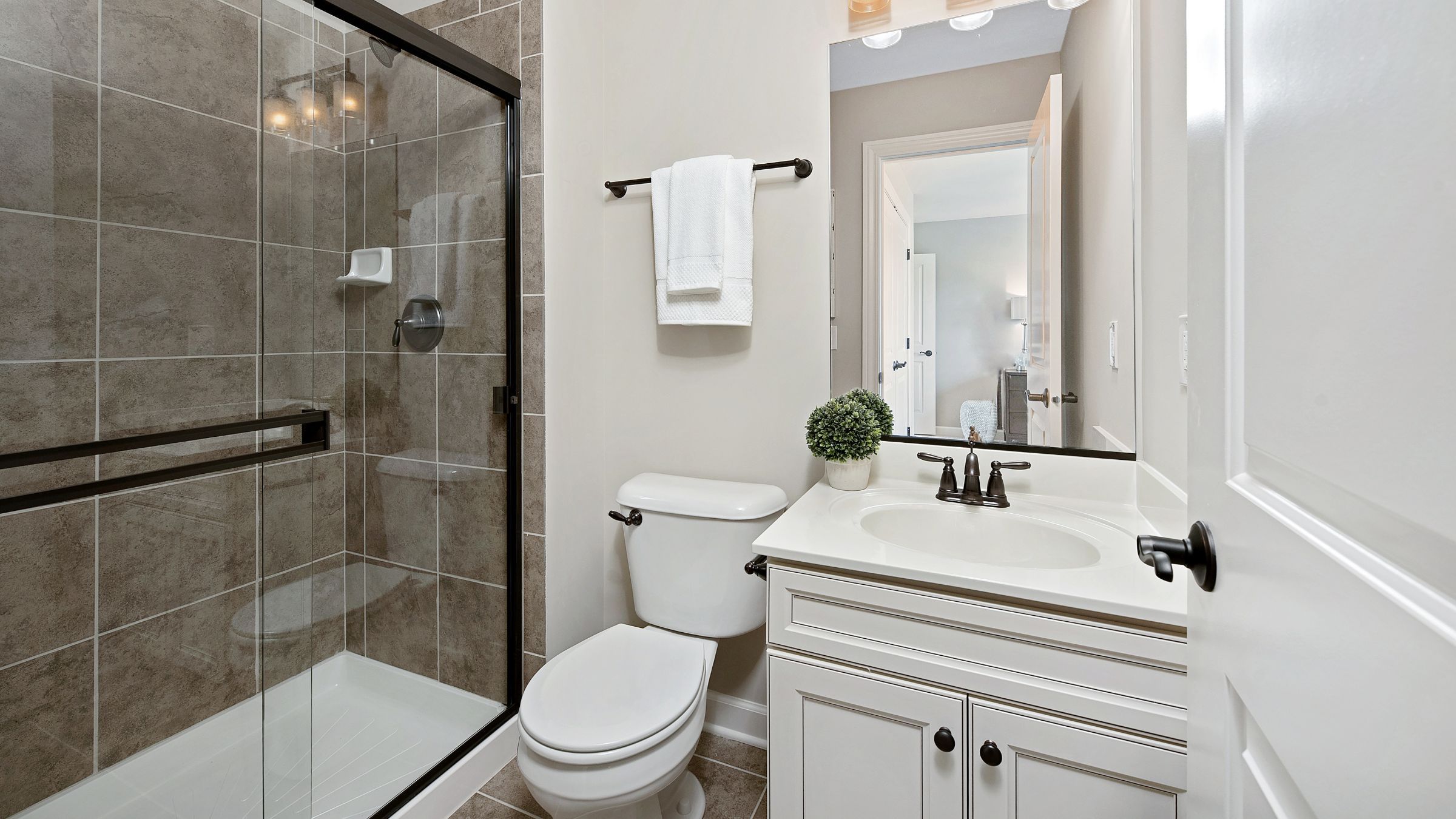
Converting a bathtub alcove into a walk-in shower runs $2,000 to $10,000, with $4,500 typical. Building a custom tile walk-in shower somewhere else runs $6,000 to $15,000.
The difference is almost entirely that the conversion inherits infrastructure. The drain is roughly where it needs to be, the supply lines are in the wall, the alcove is already framed, and the waterproofed footprint already exists in outline.
Why the alcove matters so much
A standard tub alcove is about 60 inches long and 30 to 32 inches deep, which is a workable shower footprint without moving a stud.
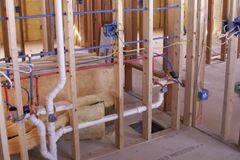
More importantly, the drain is already in the floor within a few inches of where a shower drain wants to be. Adapting a tub drain to a shower drain is a modest plumbing job. Relocating a drain to a new position means opening the floor, cutting into joists’ bays, and re-venting — that’s a different order of work, and it’s where plumbing rough-in at $600 to $2,000 per fixture starts to apply.
Keep the footprint and you keep the price. Change it and you’re doing a bathroom remodel.
What’s in the number
The conversion covers removing the tub and its surround, adapting the drain, building and sloping a pan, waterproofing, tiling walls and floor, and fitting a valve and enclosure.
The range is wide because three variables sit inside it: how much tile and which tile ($10 to $30 per square foot on walls), whether the enclosure is a fixed panel or a frameless door ($400 to $2,500), and what the subfloor looks like once the tub is out.
That last one is the reason conversions come in above estimate. Tubs leak at the perimeter slowly for years, and the damage is invisible until the tub leaves.
A conversion in an existing alcove. Longer if the subfloor needs work, which nobody can see until the tub is out.
What you’re giving up
If it’s the only bathtub in the house, that’s a real consideration — for bathing small children, for anyone who baths rather than showers, and for whoever lives there next.
We’re not going to put a number on the last one. Whether a house needs a tub depends on your market and your buyer, and anyone quoting a figure for it is guessing.
What we can say plainly: if the house has another tub, this is a much easier decision. If it doesn’t, weigh it deliberately rather than assuming a shower is simply an upgrade.
Where a conversion is the right call
- The tub is dated or damaged and you don’t use it
- Stepping over a tub wall is difficult, or likely to become so
- There’s another tub in the house
- You want the accessibility of a walk-in shower without a full remodel
- The existing alcove is a reasonable shower size
Where it isn’t
- It’s the only tub and small children live there
- The bathroom needs a new layout anyway — do it once, properly
- The subfloor is already known to be damaged, which makes it a bigger job regardless
- You want a shower larger than the alcove allows, which means moving walls and plumbing
Getting a number
The bathroom remodeling cost guide has modelled totals by size and scope for your market.
For what a full shower build involves, see walk-in shower cost. For the accessibility comparison, see walk-in tub or walk-in shower.