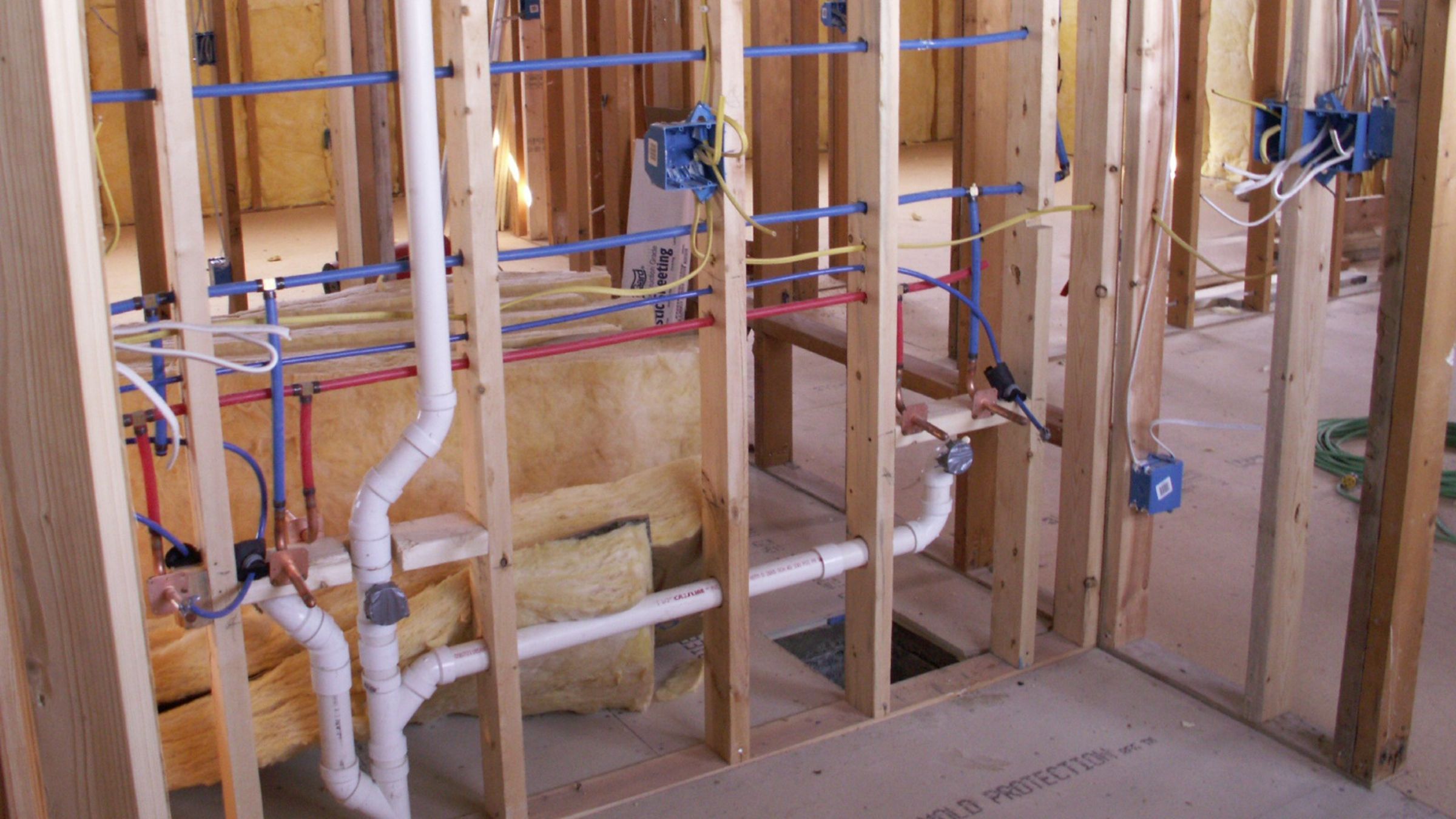
Relocating a fixture is the most expensive decision available in a bathroom remodel, and the one most often made casually during the design phase.
Bathroom plumbing rough-in runs $600 to $2,000 per fixture per the EstimationPro.AI construction cost dataset, 2026 — and that figure covers the plumbing alone, not the floor, framing and tile work that comes with it.
Why it costs what it does
What sits under a bathroom fixture. Moving one means reaching every layer below it.
A fixture isn’t sitting on the floor. It’s the top of a stack that runs down through tile, subfloor, joist bays, a drain with a required fall, and a vent.
Move the fixture and you reach every layer. The tile comes up. The subfloor gets cut and patched. The drain has to reach the stack while maintaining its fall, and it has to get there between joists rather than through them, because notching a joist to route a pipe is a structural decision.
Then the vent. Every fixture needs one, and venting is the constraint that most often turns “just move the toilet three feet” into a conversation about opening a wall upstairs.
The hierarchy of difficulty
Easiest: a vanity. Supply lines are flexible, the drain is in the wall rather than the floor, and small moves along the same wall are often straightforward.
Harder: a shower or tub. Floor drain, and the pan slope has to work with wherever it ends up.
Hardest: a toilet. Three-inch drain, strict fall requirements, and a vent. Toilets move a few inches easily and a few feet expensively.
Hardest of all: anything crossing joists the wrong way. If the new position needs a line running perpendicular to the joists at the wrong depth, the answer may be no, or may involve structural work.
When it’s worth it
When the current layout genuinely doesn’t work. A door that hits the vanity, a toilet you can’t sit at comfortably, or a shower you can’t get into — these are daily problems and worth solving properly.
When you’re doing a full replacement anyway. The floor is up and the walls are open. The marginal cost of moving something is at its lowest, and doing it later means opening everything a second time.
When accessibility requires it. Clearances for a walker or a wheelchair aren’t negotiable, and no amount of fixture choice substitutes for space.
When it isn’t
When it’s aesthetic preference alone. A vanity six inches to the left is not worth $1,100 plus floor work.
When the current layout is fine and you’re bored of it. New fixtures in the same positions change how a bathroom looks far more than most people expect, at a fraction of the cost — see refresh or full replacement.
When you’re at the top of the budget already. Moving plumbing is the line item most likely to grow once walls are open, because it’s the one that uncovers other problems.
Questions to ask before you commit
Where is the stack? Everything drains toward it, and distance from it is the main variable in what a move costs.
Which way do the joists run? This determines whether a new drain line has a clear path.
Is there a room below? Moving a drain often means access from underneath. A finished ceiling below adds work; an unfinished basement makes it much easier.
What’s the vent situation? The answer to whether a fixture can move is usually a venting answer.
A plumber can answer all four in one visit, before you finalise a layout. That visit is the cheapest hour in the whole project.
The cheaper version of the same idea
Most layout frustrations are about clearance, not position. A narrower vanity, a door that swings the other way, a corner sink, or a sliding shower door instead of a hinged one can solve the problem the layout change was meant to solve — without touching the floor.
Worth exhausting those before deciding the toilet has to move.
Getting a number
The bathroom remodeling cost guide prices layout changes separately from scope, so you can see what the decision costs on your bathroom in your market. For the tier view, see bathroom remodel cost.