The single biggest decision in a bathroom project isn’t the tile or the vanity. It’s whether you’re updating what’s there or taking it out.
A refresh keeps the tub or shower and replaces everything around it. A full replacement removes the wet area and rebuilds it. That’s the difference between a project that stays in the low five figures and one that doesn’t.
What a refresh covers
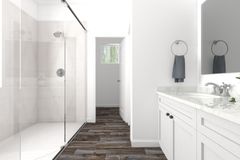
New vanity, new toilet, new mirror, new lighting, new floor, fresh paint, new fixtures and trim. The tub or shower stays.
The reason this stays cheap is that the wet area is the expensive part. Rebuilding a shower means demolition, a new pan, waterproofing membrane, backer board, and tile at $10 to $30 per square foot on the walls. A refresh skips every one of those and spends its money on things that are individually modest: a vanity at $400 to $1,700, a toilet at $300 to $800, a mirror at $100 to $500.
The result is a bathroom that looks substantially different for a fraction of the work.
What a full replacement covers
Everything a refresh does, plus the wet area comes out.
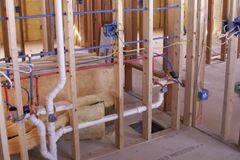
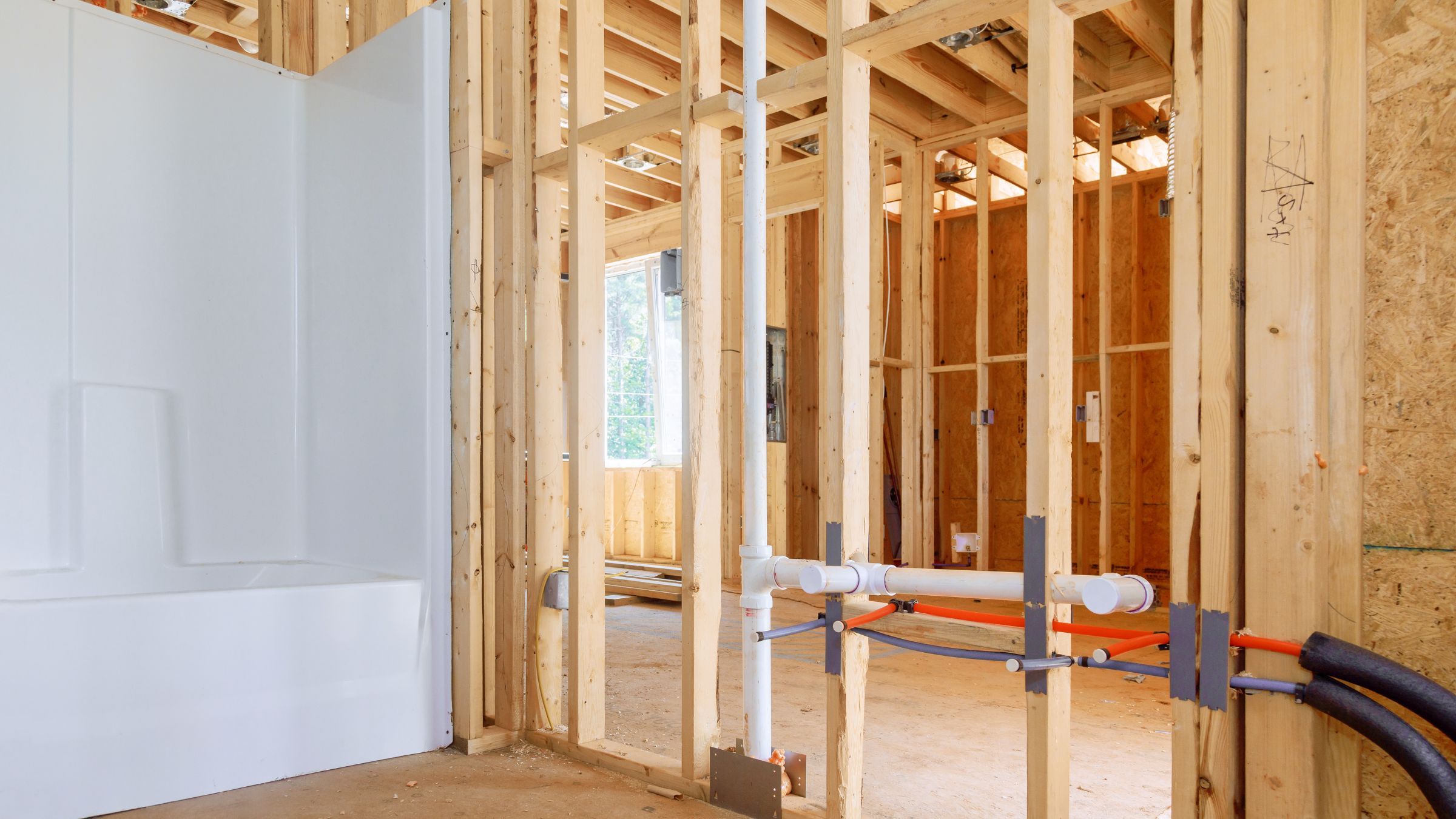
That adds demolition, a rebuilt pan or new tub set, fresh waterproofing, and wall tile — plus the possibility of subfloor and framing repair that only becomes visible once the old unit is gone.
It also adds time. A refresh can be done in days. A full replacement is typically three to six weeks, and the bathroom is unusable for most of it.
Which one you need
| If this is true | Then |
|---|---|
| The tub or shower works and doesn't leak | Refresh |
| Tile is cracked, grout is failing, or the wall feels soft | Full replacement — the substrate is the problem |
| You want a walk-in shower where a tub is now | Full replacement, or a conversion |
| The layout is fine, the finishes are dated | Refresh |
| Anything needs to move | Full replacement — see moving plumbing |
| There's staining on a ceiling below the bathroom | Full replacement, and investigate first |
The test that settles most cases
Press the wall inside the shower or around the tub surround, low down and near the corners. Sound tile over sound backer feels solid. If it flexes, sounds hollow, or the grout crumbles under a fingernail, the waterproofing behind it has probably already failed.
A refresh over a failed substrate is money spent on a wall that’s still rotting. That’s the one scenario where the cheaper option is genuinely the wrong one.
Conversely, a sound wet area with dated tile is a legitimate refresh. Tile that you dislike is a preference; tile that’s failing is a condition.
The middle path
A tub-to-shower conversion sits between the two. It rebuilds the wet area but keeps the existing alcove and drain, which is why it runs $2,000 to $10,000 rather than the $6,000 to $15,000 of building a shower elsewhere.
If the tub is the thing you want gone and everything else is fine, that’s often the whole project — see tub-to-shower conversion cost.
One thing to do either way
Add blocking. Solid timber between studs wherever a grab bar might one day go costs almost nothing while a wall is open and is disproportionately expensive to retrofit.
If you’re doing a full replacement, this is free. If you’re doing a refresh and any wall is coming off, do it there too.
Getting a number
The bathroom remodeling cost guide has modelled totals for both scopes, by bathroom size and market. For the tier-level view, see bathroom remodel cost.