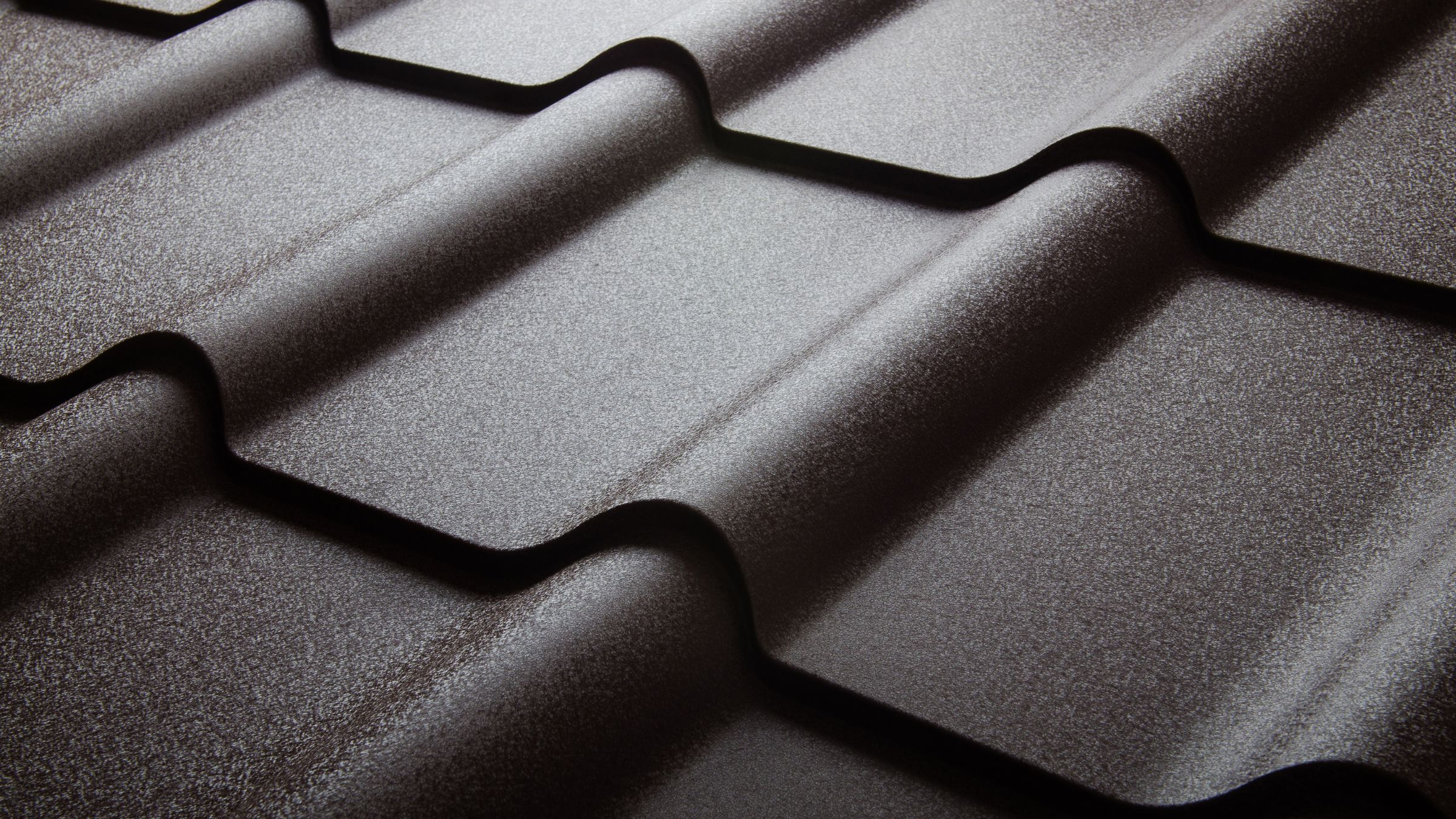
Metal roofing runs $4 to $30 per square foot installed — the widest range of any roofing material, wider than every other material combined. That isn’t imprecision. It’s because “metal roof” describes at least three different products that share a raw material and nothing else.
The three systems
| Standing seam | Metal shingles | Exposed-fastener panel | |
|---|---|---|---|
| Form | Vertical panels, ridge to eave | Stamped units laid in courses | Corrugated or ribbed sheets |
| Fasteners | Concealed under the seam | Concealed at the interlock | Through the face, with washers |
| Looks like | Modern, defined vertical lines | Slate, shake, tile or shingle | Agricultural, utilitarian |
| Where it fits | Most residential re-roofs | Homes where a traditional roofline matters | Outbuildings, barns, low-cost applications |
| Relative cost | Highest | Middle | Lowest |
An exposed-fastener panel roof and a standing seam roof are both accurately described as “a metal roof”, and one costs several times the other. This is why a metal quote without a named system, profile and gauge isn’t really a quote.
Standing seam
A standing seam assembly, deck outward. Fasteners are hidden under the seams, which is the defining feature.
The defining feature is that no fastener penetrates the weather surface. Panels attach with clips that let the metal expand and contract — metal moves a lot with temperature — and the seam covers everything.
That matters because on an exposed-fastener roof, every screw is a hole through the roof with a rubber washer keeping water out, and washers degrade faster than the metal does. Exposed-fastener systems are typically re-fastened periodically. Standing seam isn’t.
The trade-off is cost and installation skill. Panels are usually formed to length, sometimes on site, and the flashing details at walls, chimneys and valleys are less forgiving than shingle work.
Metal shingles
Stamped units that interlock and lay in courses, textured or stone-coated to read as slate, shake, tile or architectural shingle from the street.
They solve a specific problem: wanting metal’s durability on a house where a standing seam roofline would look wrong — older homes, traditional architecture, or neighbourhoods where it would stand out. Fasteners are concealed at the interlock, so they share standing seam’s main advantage.
They sit between the other two on cost, and installation is closer to shingle work than to panel work, which makes finding an experienced installer easier.
Exposed-fastener panels
The cheapest metal roofing, and the reason the material’s price range starts at $4 per square foot. Corrugated or ribbed sheets screwed through the face.
For a barn, a shop or a detached garage, this is a perfectly sensible roof. On a house it’s a different proposition: the fasteners are a maintenance item, the profile reads agricultural, and the saving against metal shingles is smaller than the visual difference suggests.
What metal asks of the rest of the assembly
A flat deck. Metal telegraphs waves and high spots that shingles hide.
High-temperature underlayment. Metal surfaces reach higher temperatures than asphalt, and standard synthetic underlayment isn’t rated for it.
Room to move. Thermal expansion is real and designed for. Systems that constrain it fail at the fasteners.
Correct flashing. Metal-to-masonry and metal-to-wall details differ from shingle details, and this is where inexperienced installations go wrong.
Metal against asphalt
Metal costs more up front — the dataset puts metal material at $120 to $900 per square against $100 to $250 for architectural asphalt — and lasts considerably longer. It’s non-combustible, sheds snow, and reflects solar heat rather than absorbing it, which matters in hot markets.
Asphalt is cheaper, faster, installed by more crews, and easier to repair locally. On a house you plan to sell in five years, the case for metal is mostly aesthetic. On one you intend to keep, it’s mostly arithmetic.
What we won’t do is put a number on the payback period. That depends on your energy costs, your climate, how long you stay and what you’d otherwise have installed — and anyone quoting a single figure for it is guessing.
For modelled project totals on both materials, see the roofing cost guide. For the per-square rates, see what roofers are actually quoting.