Damp decking, a stain on the ceiling, frost on nail heads. From inside, a roof leak and attic condensation look nearly the same — and they need opposite fixes. One is water getting in from outside. The other is water your household is generating indoors.
Two things tell them apart: the pattern and the timing.
The pattern
A leak follows a path. Water enters at one point, runs along framing or decking to a low spot, and drips. So the damage tends to concentrate — one bay, one track, one stain that reappears in the same place.
Condensation forms wherever warm moist air meets a cold surface, which is everywhere the underside of the roof is cold. So it shows up scattered across multiple bays, often fairly evenly, and often worse near the ridge or on the north slope.
Wide and scattered means condensation. Concentrated and repeating means a leak.
The timing
| Roof leak | Attic condensation | |
|---|---|---|
| Appears after | Rain, thaw, wind-driven storms | A clear, cold night |
| Pattern | One track, one low point | Scattered across several bays |
| Season | Any | Cold months, mostly |
| Frost on nails | No | Common |
| Insulation | Wet in one area | Damp or matted broadly |
| Fix lives | On the roof | In ventilation and air sealing |
Frost on nail heads after a freezing clear night is close to diagnostic. Water did not come through the roof on a night with no precipitation.
What to check, safely
If you can get into the attic, bring a flashlight and look at three things.
The decking underside. Dark streaks running downslope suggest a leak path. An even film of moisture or frost across a wide area suggests condensation.
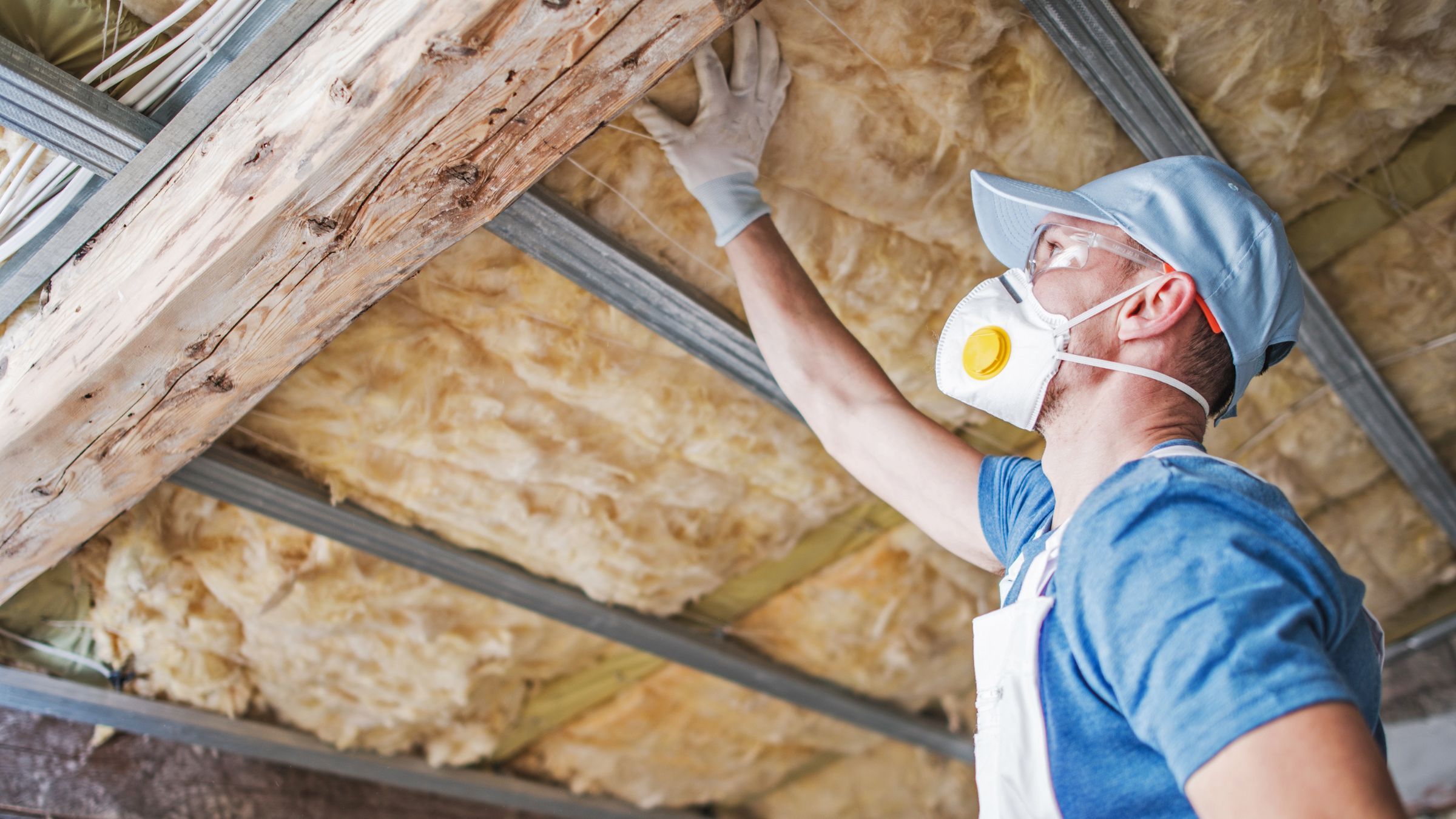
The insulation. Wet in one spot, near a penetration or a valley, points to a leak. Broadly damp, compressed or matted points to humidity. Insulation that feels heavy has been wet for a while either way.
The penetrations. Bath fans, plumbing vents, and chimney chases. A bath fan venting into the attic rather than through the roof is one of the most common causes of attic moisture, and it is easy to spot — a flexible duct that simply ends.
From the ground, scan the roof with binoculars for missing or broken shingles and damaged edges near vents, skylights and the chimney.
Why condensation happens at all
Warm air holds more moisture than cold air. Your household generates a lot of it — showers, cooking, laundry, breathing. That warm moist air rises, and if the ceiling plane leaks air into the attic, it carries moisture with it.
When it reaches the cold underside of the roof deck, the moisture condenses. In a freezing snap it forms frost, which then melts during the day and drips — which is why people so often report a leak that only happens in winter and never during rain.
The fix is not on the roof. It’s some combination of sealing air leaks in the ceiling plane, venting bath and kitchen fans to the outside rather than the attic, and making sure soffit and ridge vents are actually open and not packed with insulation.
Ice dams: the case where both are true
There’s one situation where the distinction blurs. When attic heat melts snow on the roof and the meltwater refreezes at the cold eave, it forms a dam. Water backs up behind it and gets under the shingles.
That is a genuine leak — outside water entering the assembly — but its cause is the same heat and air leakage that drives condensation. Fixing the roof alone won’t stop it recurring.
If you see icicles along the eave and staining on the ceiling near exterior walls, that’s the pattern.
What to do next
If it reads as condensation, the work is ventilation and air sealing, and it is not urgent in the way a leak is — but wet insulation loses most of its R value and stays wet, so it isn’t something to leave for years either.
If it reads as a leak, find the entry point before it soaks decking. Most roof leaks start at flashing rather than in the field of the roof — see roof leaking around the chimney for the most common version of that.
If the decking is soft, stop diagnosing and get a roofer up there. Soft decking means water has been present long enough to matter, and the repair grows the longer it sits. What that costs is on the roofing cost guide.