A gutter doesn’t catch water so much as route it. It takes what comes off the roof edge, moves it along a channel, sends it down a downspout and discharges it somewhere that isn’t your foundation. When gutters fail, it’s almost always because one link in that chain was planned badly — not because the gutter itself was cheap.
Three things decide whether a run works: slope, hanger spacing, and downspout placement.
Before you start: check the fascia
What a gutter hangs from, structure outward. The system is only as good as the board at the back of it.
The gutter hangs off the fascia board, and the fascia hangs off the rafter tails. If the fascia is soft, split or rotten, nothing you fasten to it will hold — and a gutter full of water is heavy.
Press along the fascia before you plan anything. Soft board is a carpentry job first. Fitting new gutters to failing fascia is the most expensive mistake in this project, because you do it twice.
Soffit and fascia replacement runs $6 to $20 per linear foot per the EstimationPro.AI construction cost dataset, 2026.
Slope: the number that matters
Gutters are not level. They fall toward the outlet at roughly a quarter inch per ten feet — enough to move water, little enough that the eye doesn’t read it as crooked.
Mark the high point first, snap a line to the outlet, and set every hanger to that line. Working the other way — hanging the gutter and then hoping it drains — is how you get standing water.
On a long run, put the high point in the middle and fall to outlets at both ends rather than running a single long fall. It halves the drop, which keeps the run looking level.
Layout: downspouts first
Plan the downspouts before the gutters, because everything falls toward them.
Roughly one per 30 to 40 feet of run. Two short falls beat one long one, and a run longer than about 40 feet with a single outlet will back up at the far end in heavy rain.
Put them where the water can go somewhere. A downspout that discharges against the foundation has moved the problem three feet. Extensions, splash blocks or a buried drain line are part of the job, not an afterthought.
Avoid the walkway. Obvious, routinely forgotten, and unpleasant in January.
Hangers: spacing and type
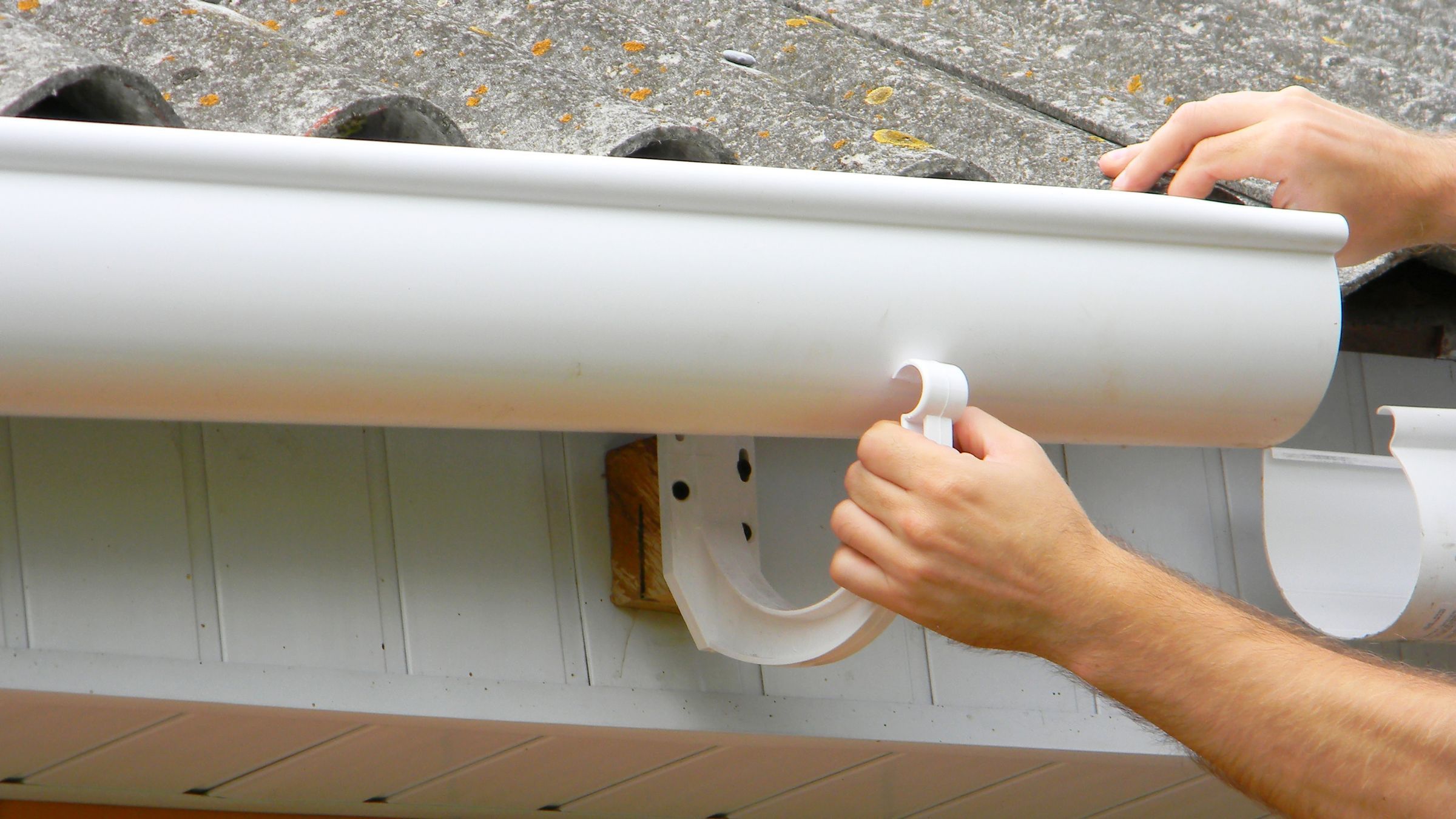
Hidden hangers clip inside the gutter and screw through the back into the fascia. They’re the current standard, they don’t pierce the front face, and they hold better than spike-and-ferrule. External brackets are still used, particularly with half-round gutters, where the profile doesn’t accept an internal clip.
Space them about every two feet, and tighter in snow country — roughly every 18 inches where ice load is a factor. This is the cheapest place to add strength and the most common place to skimp.
Fasten into solid wood. If a screw spins, you’ve found soft fascia.
Sizing
Five-inch K-style is the residential default and handles most roofs.
Six-inch carries substantially more water and is worth it on large roof areas, steep pitches, or where a lot of roof drains into a short run. If the current gutters overflow in heavy rain, sizing is the first thing to check — see do gutter guards work in heavy rain.
Downspouts should scale with the gutter. A six-inch gutter draining into a two-by-three downspout is a bottleneck.
Seams, ends and testing
End caps and seams are where slow leaks start. Seal on the inside of the joint so water isn’t sitting against a bead of sealant with gravity behind it, and give it time to cure before testing.
Then test with a hose at the high end of each run. Watch for standing water after it drains, drips at the seams, and whether the discharge actually clears the foundation. Five minutes here saves a winter of guessing.
If you’re adding guards
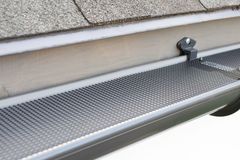
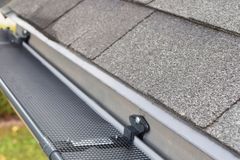
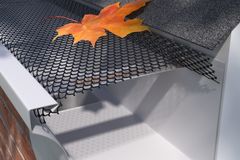
Fit them after the run is tested and working. A guard on a gutter that doesn’t drain properly hides the problem rather than solving it, and some types tuck under the shingle course, which is easier to get right on a system you’ve already confirmed is level and sound.
For what guards cost per foot, see gutter guard cost. For modelled project totals, see the gutter guards cost guide.