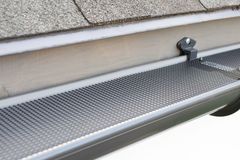
Gutter guards fall into five broad types. They differ in what they block, what they let through, and how they fail — and the failure mode matters more than the marketing.
The five types
| Type | How it works | Gets through | Fails by |
|---|---|---|---|
| Brush | A bristled cylinder sits inside the gutter | Pine needles, seeds, grit | Filling with debris that then has to be pulled out |
| Foam | Porous block fills the channel; water passes through | Fine debris, over time | Degrading, holding moisture, algae growth |
| Screen | Perforated panel over the gutter, often under the shingles | Anything smaller than the holes | Clogging at the holes, or blowing loose |
| Reverse curve | Surface tension carries water round a lip; debris falls past | Little, when clean | Losing the tension effect in heavy rain; visible from the ground |
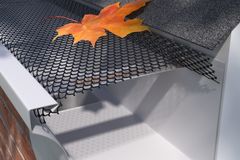
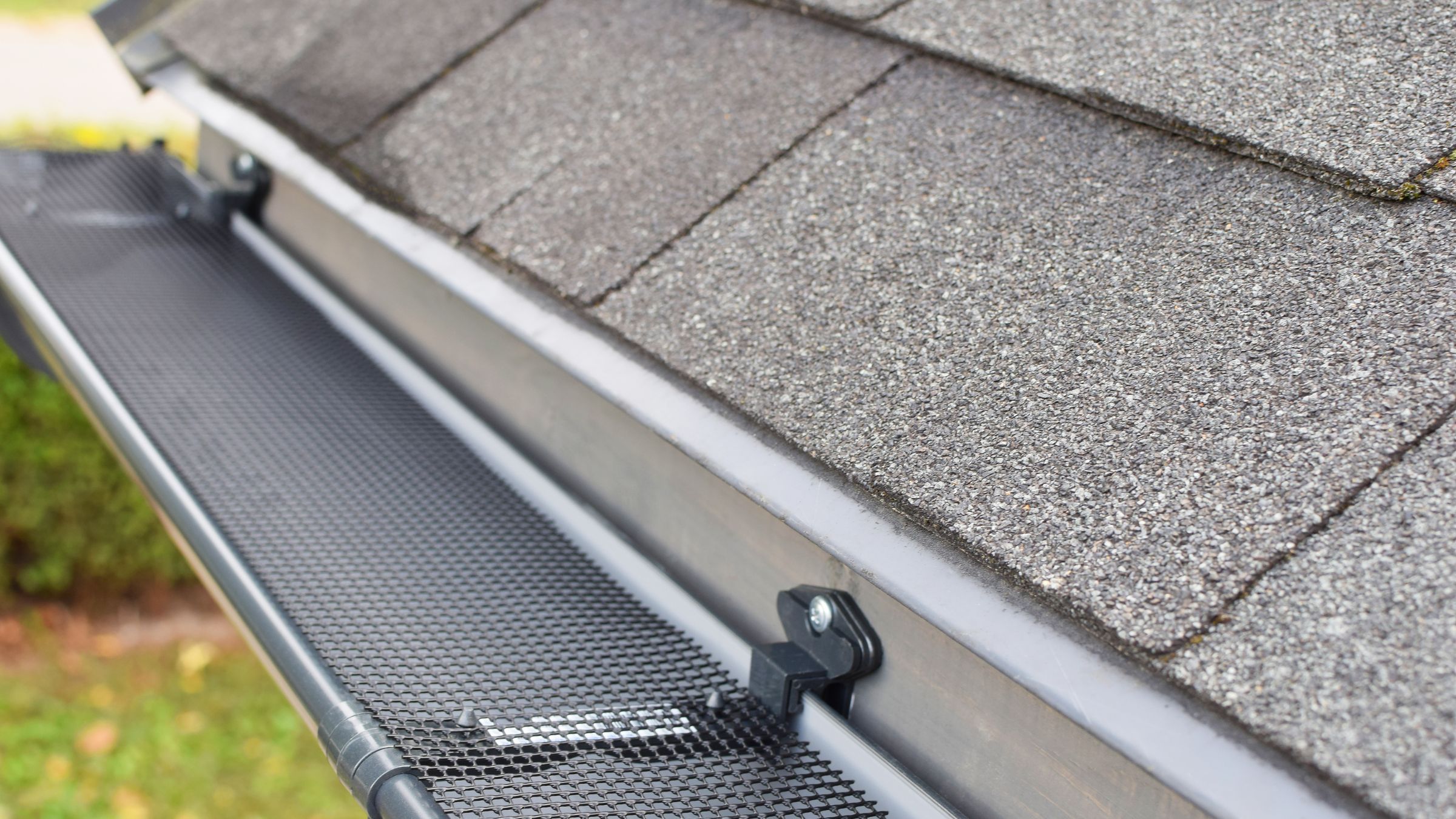
| Micro-mesh | Fine stainless mesh on a frame | Almost nothing | Surface blinding — grit and pollen mat the mesh |
What the trade-off actually is
Every guard is balancing two failure modes, and you cannot minimise both.
Block too little and debris gets into the gutter, which is what you were trying to prevent. Block too much and the guard itself becomes the surface that clogs — water sheets straight over the top and off the edge, and now you have a gutter that’s clean and useless.
Micro-mesh sits furthest towards “block everything”, which is why it performs best on pine needles and shingle grit, and why the thing that eventually limits it is the mesh blinding over rather than the gutter filling up.
Brush and foam sit at the other end. They’re cheap and easy to fit, and their failure mode is that they slowly become the debris.
Choosing by what falls on your roof
Broad leaves — most types handle these. Screens are adequate and cheapest to fit.
Pine needles — micro-mesh, effectively. Needles thread through screens, brushes and foam, and they’re the single most common reason a guard disappoints.
Shingle grit — an ageing asphalt roof sheds granules continuously. Fine mesh catches them, so grit is the thing most likely to blind a micro-mesh guard over time.
Seeds and blossom — maple keys, oak catkins and similar are small, fibrous and get everywhere. Fine mesh again.
Not much of anything — an open lot with no overhanging trees may not need guards at all. That’s a legitimate answer and it’s worth reaching before spending.
Installation matters more than type
Two things sink guards regardless of which you pick.
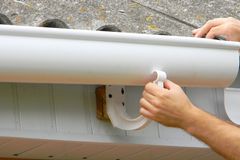
Guards that slide under the shingle course. Some types tuck beneath the first row. Done badly this lifts shingles, breaks the seal, and can affect a roof warranty. Worth asking specifically how the guard attaches.
Guards fitted to failing gutters. A guard fastens to the gutter and the gutter fastens to the fascia. If the fascia is soft or the hangers are pulling out, the guard is being attached to something that’s already failing.
The install quality gap between types is also real. Reverse-curve systems in particular depend on precise positioning to work at all, and they are the type most often installed by specialists rather than general gutter crews.
What none of them do
No guard eliminates maintenance. Fine material accumulates on top of any surface that blocks debris, and every type needs occasional attention — the difference is that it’s usually from the ground with a hose rather than from a ladder with your hands.
Any guarantee that you will never clean your gutters again is a marketing claim, not a product specification.
For what guards cost per foot and how that compares to new gutters, see gutter guard cost. For modelled project totals by home size, see the gutter guards cost guide.