Guards change gutter maintenance from a twice-yearly job with your hands in a trough to an occasional rinse from the ground. They don’t eliminate it, and any product guaranteeing that you’ll never clean your gutters again is overselling.
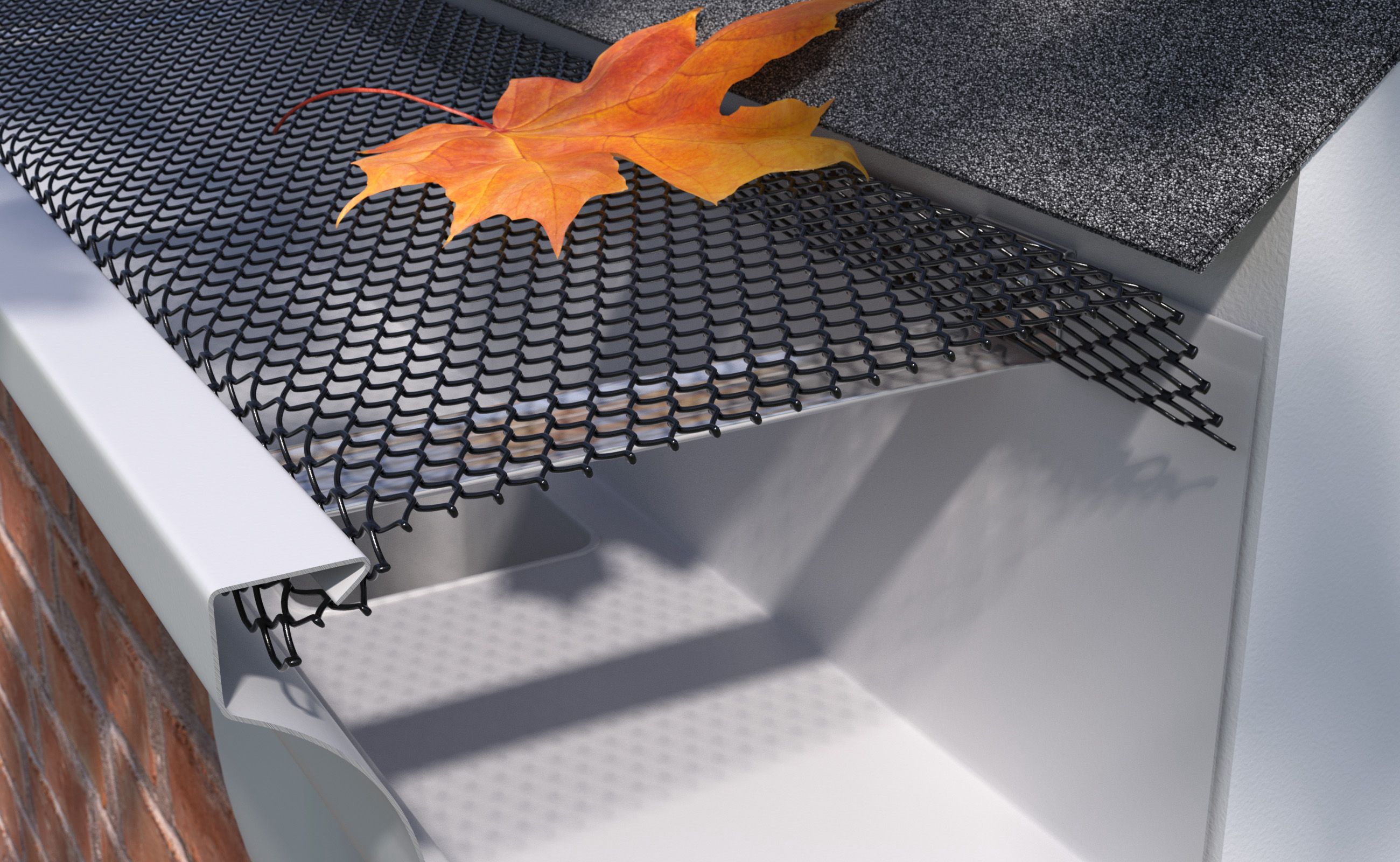
What actually accumulates on a guarded system is fine material — pollen, shingle grit, dust, pine needle fragments — and it sits on top rather than inside.
What still needs doing
Rinse the surface. Once or twice a year, a hose from the ground clears most of what has settled on a mesh or screen. Aim across the guard rather than down into it, so you’re washing material off the edge rather than pushing it through.
Clear the valleys. Where two roof planes meet, debris concentrates and water arrives fast. This is the spot most likely to pile up regardless of guard type.
Check the downspout outlets. Fine material that does get through eventually settles at the lowest point. A guarded gutter with a blocked outlet still overflows.
Look after storms. A branch or a mat of wet leaves sitting on a guard is the one thing that needs prompt attention, because it blocks the surface completely.
Telling a blocked guard from a blocked gutter
They look identical from the driveway and need different responses.
In rain, look at what the water does. Water running over the top of the guard with a clean, dry gutter underneath means the guard surface has blinded — that’s a rinse. Water backing up inside the gutter and spilling at the front edge means material has got past the guard and settled, or the outlet is blocked — that’s a proper clean.
The second is much less common on micro-mesh, and much more common on brush and foam inserts, which fill from the inside.
By guard type
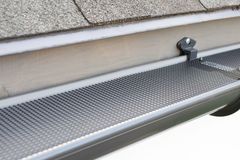
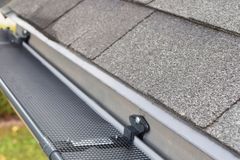
Micro-mesh — surface rinse. Almost nothing gets inside, but the mesh is the thing that blinds, so the surface is where the work is.
Screens — surface rinse, plus occasional checks inside. Anything smaller than the perforations has been getting through all along.
Reverse curve — the opening slot can accumulate at the lip. Usually needs looking at rather than just rinsing.
Brush and foam — these fill internally, and eventually the insert has to come out to be cleared or replaced. Foam in particular holds moisture and degrades; plan on replacement rather than indefinite cleaning.
What not to do
Don’t pressure wash a mesh guard. High pressure deforms fine mesh, drives material into it, and can lift the guard off its fastening. A garden hose is the right tool.
Don’t pry guards off to clean underneath unless the type is designed to be removed. Many are fitted under the shingle course, and levering them disturbs the roof edge.
Don’t walk the roof to reach them. Most of this is ground work with a hose and a look. If something genuinely needs hands on it, that’s a ladder job done properly or a service call.
When to call someone
Professional gutter cleaning runs $100 to $300 per visit per the EstimationPro.AI construction cost dataset, 2026. Worth it when the roof is steep or above one storey, when guards need removing and refitting, or when you’re not sure whether what you’re seeing is a surface problem or a gutter problem.
If you’re calling every year despite having guards, the guards are probably the wrong type for what falls on your roof — see gutter guard types compared.
For what guards cost to fit in the first place, see gutter guard cost.