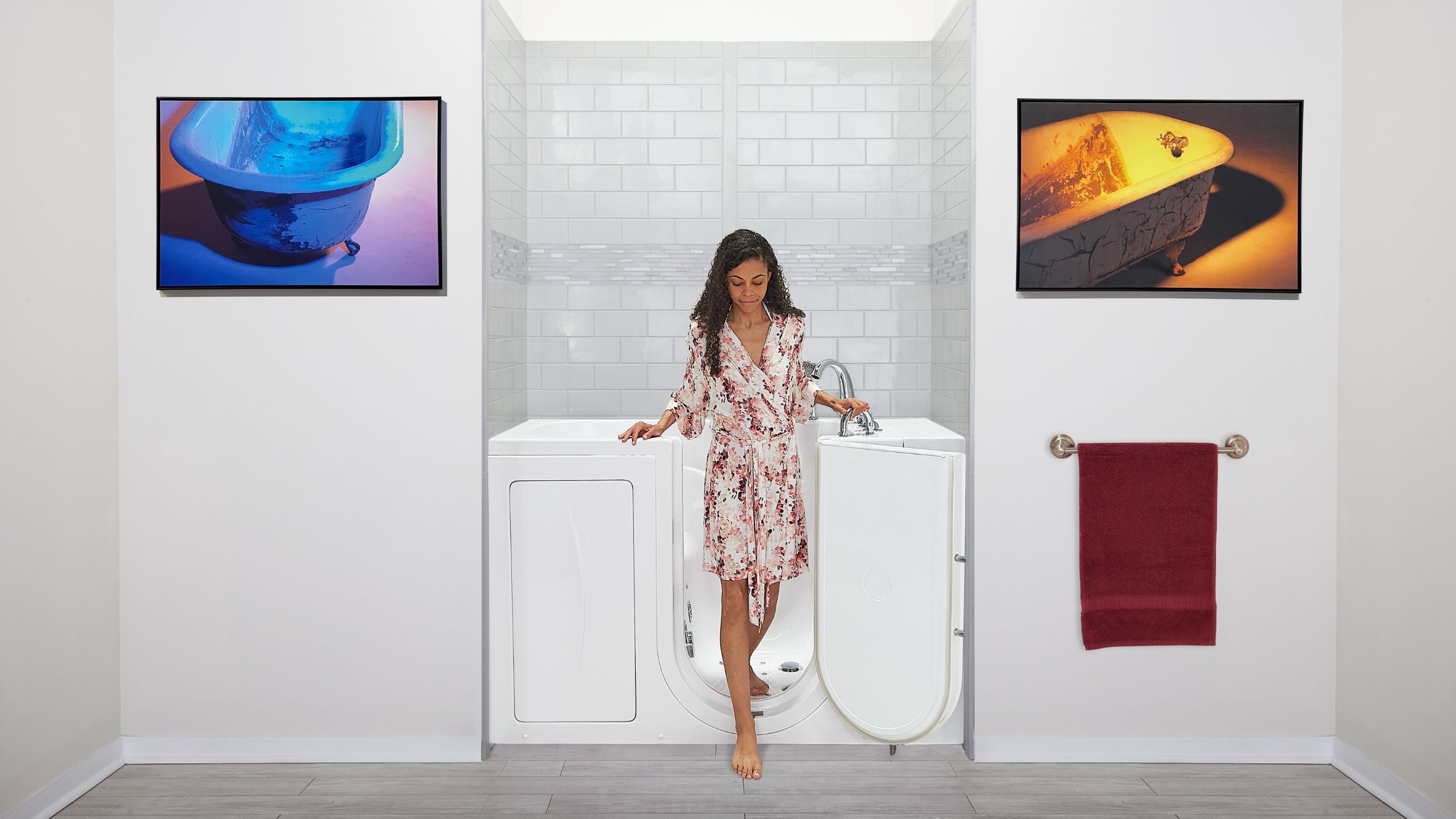
A walk-in tub is really two purchases with different behaviour, and separating them explains most of what’s confusing about the quotes.
The tub is a manufactured unit. It costs roughly the same in Phoenix as in Minneapolis, because it’s built in a factory and shipped. Market conditions barely touch it.
The installation is local construction work. Removing the old tub, adapting the plumbing, running a circuit for a jetted model, rebuilding the surround — all of that is priced by local labour rates, and those swing 14% below to 23% above the national average depending on your ZIP code.
That’s why a walk-in tub estimate moves less by market than a roofing or siding estimate does. A large share of the total isn’t regional at all.
For the modelled figures on both halves, see the walk-in tubs cost guide, which prices the unit nationally and the installation for your market.
What moves the unit price
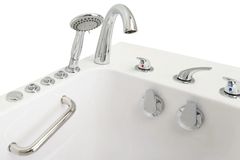
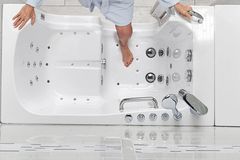
The tub tier. A soaking tub — door, seat, low step-in, no jets — is the base. Air or water jets sit above it. Combined air and water systems sit above that. These are equipment tiers, and each step is a genuine hardware difference rather than a trim level.
Wheelchair and transfer configurations. Outward-swinging doors and transfer-height seating are built differently and priced accordingly.
Size. A larger tub is more material and, more importantly, more water — which has consequences below.
What moves the installation
What’s there now. Replacing a standard tub in its existing alcove is the simplest version. Converting a shower footprint means new framing, and often new plumbing routing, because a tub drain and a shower drain don’t sit in the same place.
Bathroom size. This affects installation more than it affects the tub. A walk-in tub is a large rigid object that has to get through a door, round a corner and into position without being tipped. Tight access means trim work, sometimes door removal, and occasionally a wall opened up.
Electrical. Jetted models need a dedicated circuit, and often a GFCI. If the bathroom doesn’t have capacity, that’s an electrician and a panel run.
Plumbing capacity. Bathroom plumbing rough-in runs $600 to $2,000 per fixture per the EstimationPro.AI construction cost dataset, 2026. Moving a drain is the most expensive single decision available.
A typical walk-in tub installation. Longer when the tub is larger than what it replaces.
The thing most quotes don’t mention
Your water heater. A walk-in tub is filled while you’re sitting in it, and it holds considerably more water than a standard tub at bathing depth. If the heater can’t deliver enough hot water in one draw, the tub fills lukewarm — and there is no way to fix that after the fact except replacing the heater.
Ask what capacity the tub requires and compare it to what you have, before the order goes in. This is the single most common source of disappointment with an otherwise correctly installed walk-in tub.
On Medicare, Medicaid and the VA
Medicare typically does not cover the cost of a walk-in tub. It is generally treated as a home modification rather than durable medical equipment.
Coverage under other programmes varies by state, by programme and by individual circumstance, and it is not something we can tell you from here. If funding is part of your decision, get the answer from the programme directly before you order — not from a contractor, and not from us.
We’d rather say that plainly than imply an entitlement that may not exist.
What isn’t included
Surround and finishing. Tile, panels, and making good where the old unit was.
Ventilation. A bathroom exhaust fan replacement runs $150 to $450, and a tub adds moisture to a room.
Grab bars beyond the tub’s own. ADA grab bars run $75 to $250 each installed. Most walk-in tubs have integrated bars; a bar on the approach is separate.
Floor repair. Only visible once the old tub is out.
Getting a number
The walk-in tubs cost guide has modelled totals by tub type, what’s currently in the bathroom, and your market — with the unit and the installation shown separately, which is the only way the number makes sense.
For practical questions about living with one, see the walk-in tub FAQ.