Vinyl runs about $5 per square foot installed. Fiber cement runs about $10. That’s the headline difference, and it’s the one most comparisons stop at.
The more useful difference is what happens to each material after it’s on the wall.
What separates them
| Vinyl | Fiber cement | |
|---|---|---|
| Installed, per sq ft | $3–$9 | $6–$15 |
| Weight | Light — one installer can handle a panel | Heavy — usually a two-person lift per board |
| Finish | Colour runs through the material | Factory-painted or field-painted surface |
| Repainting | Not painted | Expected over time |
| Fire behaviour | Combustible | Non-combustible |
| Common failure | Fading, cracking, panels working loose | Finish wear before the board itself |
Installed rates from the EstimationPro.AI construction cost dataset, 2026.
The cost gap is smaller than it looks
Doubling the material rate does not double the project. A replacement pays for tear-off, weather barrier, trim and a crew regardless of which material goes on, and those costs are identical either way.
Both materials sit on the same wall build-up. The layers underneath don't change with the siding you pick.
On a typical single-storey home the wall area is roughly 1,794 square feet. The material rate difference across that area is real, but tear-off, barrier and trim add several thousand dollars to either job before a single board goes up. The gap between the two finished projects is proportionally smaller than the gap between the two rates.
For the modelled project totals on both materials, by home size and storeys, see the siding cost guide, and for the component-level breakdown see what you’re actually paying for.
Where the colour lives
This is the difference that decides most of the long-term experience.
Vinyl’s colour runs through the material. A scratch doesn’t reveal a different colour underneath, and the wall is never repainted. The trade-off is that when the colour fades — and dark colours fade fastest — the only remedy is replacement. You cannot refresh a faded vinyl wall.
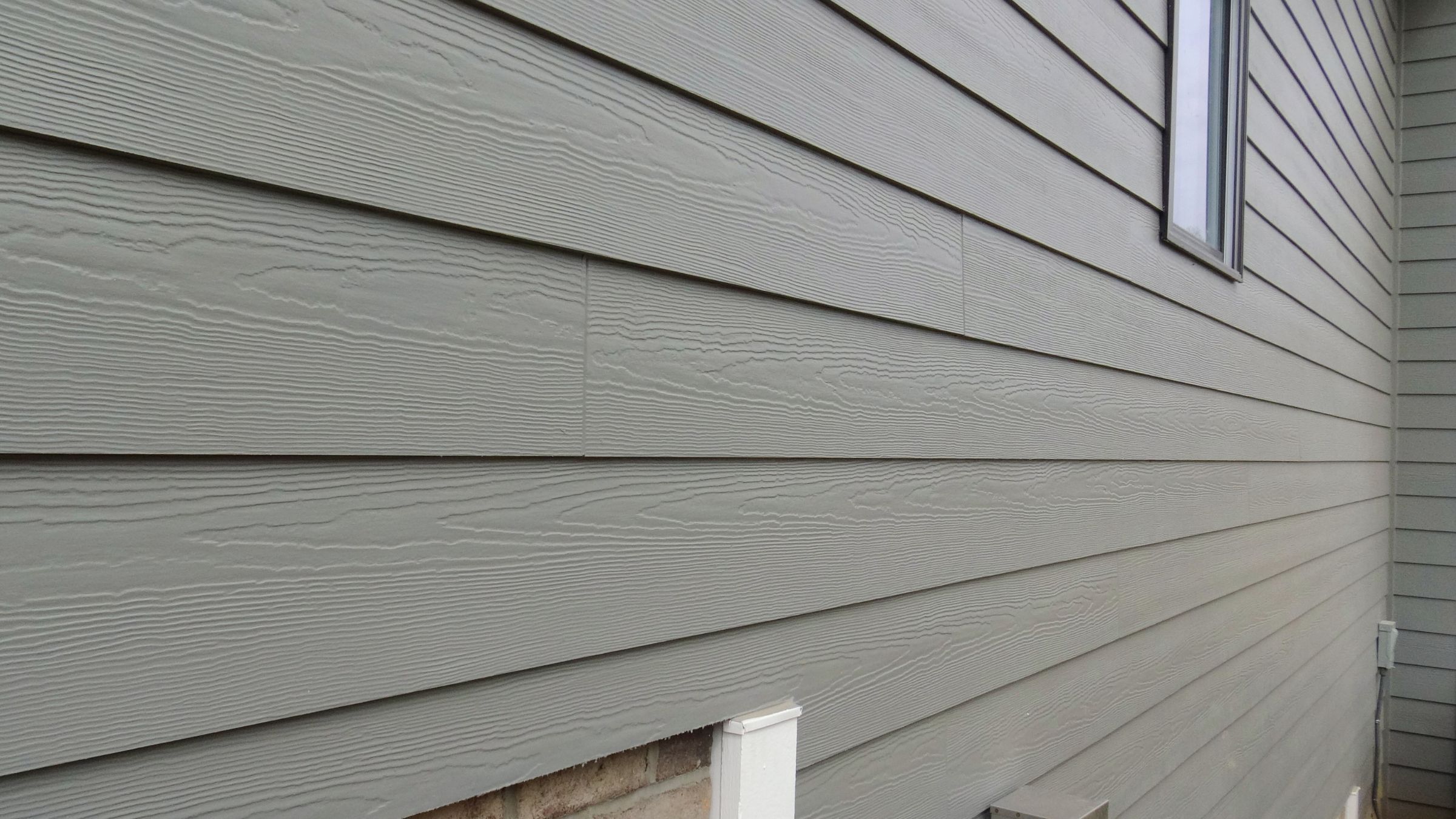
Fiber cement’s colour is a coating on the surface. That means it can be repainted, which is both a maintenance obligation and an option: you can change the colour of the house without changing the siding. Factory finishes carry their own warranty terms separate from the board.
So the question isn’t only which lasts longer. It’s whether you would rather own a wall that never needs painting but can’t be refreshed, or one that can be refreshed but will eventually need it.
Weight, and why it shows up in the quote
Fiber cement is substantially heavier than vinyl. Boards are usually a two-person lift, cutting produces silica dust that requires proper handling, and fastening is less forgiving.
That doesn’t make it a worse material — it makes it a slower installation, which is part of why the installed rate is higher even though the raw material gap is narrower. When a fiber cement quote comes in above what the material alone suggests, labour is usually the reason.
How to decide
Vinyl makes sense when budget is the binding constraint, when you don’t want a maintenance obligation, and when you’re content with the colour you choose being the colour you keep.
Fiber cement makes sense when you want a non-combustible exterior, when you expect to keep the house long enough that repainting is a feature rather than a chore, or when the look you want is closer to painted wood.
Both are mainstream products installed by the same crews. Neither is a compromise choice, and the wall behind them — the part that actually keeps water out — is identical either way.